Episode 3: Crispy Crust and the Secret of Raisins
KOXLO AI Studio
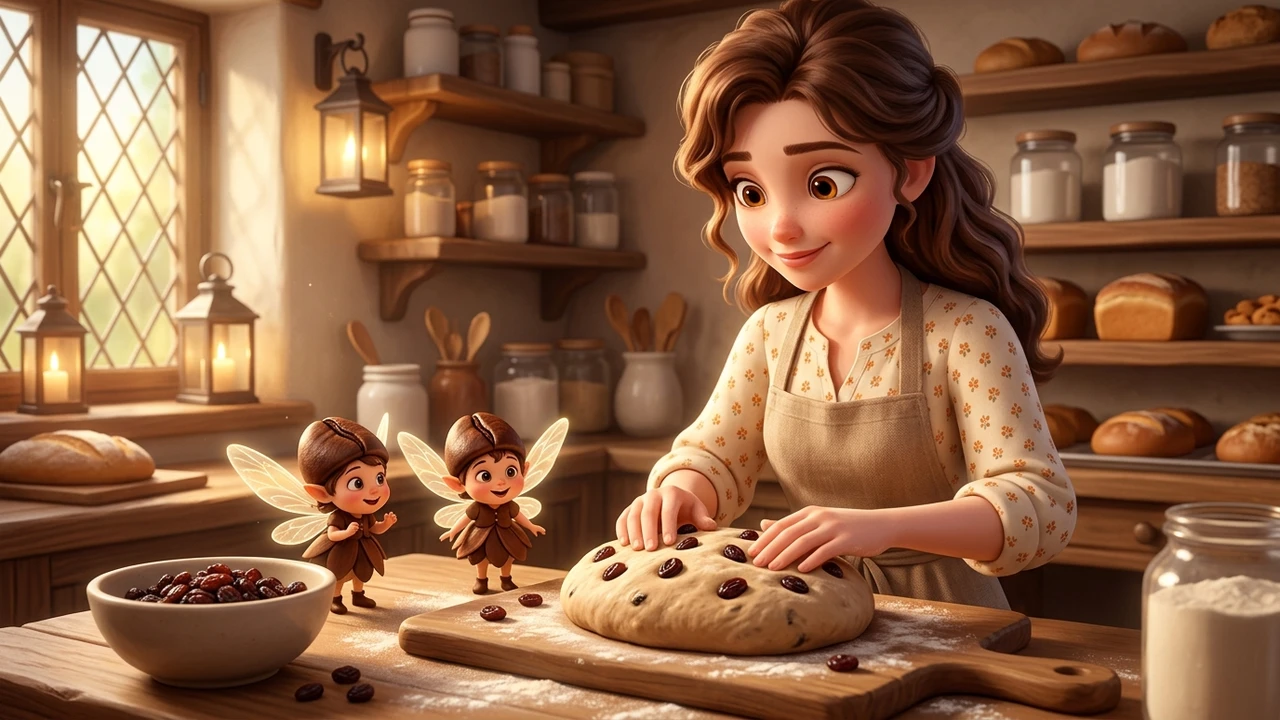
What makes mocha bread unique among the many breads in the world is thanks to two secret magics. The first was a fragrant coffee biscuit crust that crisply hugged the top of the bread, and the second was a raisin that was embedded like a jewel between the soft insides and bursting with sweet and moist juice every time you chewed it. Often, when people eat mocha bread, they only peel off the sweet outer skin or pick out the raisins, but for Jane, raisins were the most precious reservoir of moisture that kept the bread moist and the culmination of the taste.
Jane carefully took out a large glass airtight container placed on one side of the counter. As soon as I opened the lid, the heavy and captivating alcoholic scent of dark rum and the sweet scent of vanilla bean immediately filled the kitchen air. Inside the glass jar, plump, dark purple California raisins had been soaked in rum and acacia honey for two weeks, glistening with moisture.
“Wow...! The sweet smell makes my head tingle!” Pong flew in like a sparrow and hung precariously on the edge of the mouth of the glass bottle. Pong’s small nose was constantly moving, sniffling. “Pong, it’s dangerous! If you fall into the bottle, you’ll be so drunk on rum that you won’t be able to fly and will roll around on the floor.” Lulu was scared and grabbed the hem of Pongi's clothes.
“Let go, Lulu! I just want to taste just one. Look at that shiny sheen. It’s just like a black pearl!” “No! That’s the amount that should go into bread. It’s not a snack that should go into your stomach!” “Chii, does the taste of bread change if a raisin is added to a body the size of millet?” Watching the two fairies bickering, Jane scooped out a plump raisin with a small teaspoon and placed it in Fong’s small hand.
“Now, Pong. You try it first to see how it tastes.” “Wow! Jane is the best!” Fong held the raisin tightly with both hands and took a bite. Bittersweet rum syrup burst out between his lips, and Pongi's cheeks turned bright red.
“Haa... It’s so full of juice that it melts right down to the inside. It’s not tough at all, it’s just like fruit jelly!” “Hehe, if you just put dried raisins into the dough, they will suck all the moisture out of the bread and the bread will become dry. My teacher always emphasized this to me when I first learned how to bake.
‘Raisins do not take away the moisture from the bread on their own, but on the contrary, they are added to the dough only when they are ready to give up their own sweetness and juice to the bread.’” Jane drained the excess rum syrup through a sieve and sprinkled the raisins evenly over the finished bread dough. Jane's touch was careful yet rhythmic. Lightly tap the round dough with the palm of your hand, flatten it into a wide oval shape, and stuff it with rum-soaked raisins. The hand movements that dispersed the elements evenly so that they were not too concentrated on one side were elegant. Roll the dough from the top and come down, pinching and pinching the seams with your fingertips.
The round dome shape of the traditional mocha bread, which is sleek yet plump like a rugby ball, has been completed. “Now, we have to make Mocha Bread’s clothes and dress him up.” In a clean stainless steel bowl, Jane mixed unsalted butter softened at room temperature, unrefined organic brown sugar, and unrefined brown sugar to add a subtle flavor in a ratio of 7 to 3. As I grabbed the whisk and stirred vigorously, the crunchy sugar particles merged with the butter and turned into a soft, light brown cream.
“Pong, your scent is filling the whole kitchen now!” Lulu looked down at the butter cream and smiled mischievously. “Hmph, how fragrant and luxurious my scent is! Jane, is it time to add the eggs now?” “Yes. If you pour in the egg water all at once, the milk fat in the butter and the moisture in the eggs will separate and form a crust, so you have to pour it in little by little three times.” Jane whipped the whisk at a furious speed, dropping a few drops of the fresh fertilized egg mixture. The butter and egg were perfectly emulsified without a single drop of separation, giving off a silky smooth sheen.
Add the cooled concentrated espresso liquid, fine cake flour, and a little cinnamon powder and mix with a silicone spatula. The mocha biscuit dough, which was mixed lightly to the point where no dust was visible, had a dark coffee color and gave off a fascinating coffee aroma.
“Jane, if you knead the biscuit dough too much, it creates gluten and loses its crunchiness, right?” Lulu pretended to know as she carefully observed the end of Jane's spatula. “That’s correct, Lulu. Cookies and biscuits need to be gently kneaded and rolled together lightly to prevent gluten from forming in order to have a crispy, crumbly texture when baked. If you crush them with force, they will end up with a hard and tough crust.” Jane divided the finished biscuit dough into six equal parts, rolled them into balls, and placed them on a silicone pad lightly sprinkled with additional powder. Holding a wooden rolling pin, the dough was carefully rolled out into a uniform oval shape 3 millimeters thick.
If it was too thick, the bread would become heavy, and if it was too thin, it would tear during baking, so maintaining an exact thickness of 3 millimeters was key. I carefully lifted the thin biscuit skin with my palm and gently covered it with the top of the bread dough that I had previously formed into the shape of a rugby ball. Jane's secret was to not cover all the sides and bottom of the bread, but to only cover about 80% of the top and sides.
“Huh? Jane, why don’t you cover all the way to the bottom?” Pong asked, craning his neck from the countertop. “If you cover the entire bottom, the pores that allow the bread to rise during the second fermentation will be blocked. And if the bottom is covered with biscuits, the sugar will burn from the heat of the oven floor stones and taste bitter. Only the top should be covered like a hat so the bread can breathe freely and grow.”
“Indeed… even bread needs breathing space.” Lulu nodded with admiration. “Well, just as people feel suffocated when they wear clothes that are too tight, the same goes for bread. There must be room and space for soft skin to bloom within.” Jane spread parchment paper on the iron plate and carefully panned the six mocha bread dough, beautifully dressed in biscuit clothes, at regular intervals. The dough placed on the pan was lovely and neat, like small animals beautifully dressed in brown fur coats. Jane held the pan with both hands and headed to the secondary fermentation room.
When the pan was pushed into the warm fermentation room at 35 degrees Celsius and 80 percent humidity, warm steam enveloped the surface of the dough to moisten it. “Now, during the last 35 minutes, the bread will slowly rise. As the bread rises, the biscuit dough on top is stretched and ready to burst into natural, spider-like brown cracks when placed in the oven.”
“It’s really pretty to see the inside of the bread peeking through the cracks!” Pong swallowed his saliva and said. “That’s right. That crack is like the sheet music for the song the mocha bread sings in the oven.” After closing the fermentation room door, Jane wiped her hands on her apron and walked out into the store hall. These 35 minutes, as the bread quietly breathed and prepared to cook, were the most orderly and peaceful time of the day. Jane carefully wiped the wooden table and chairs with a dishcloth soaked in warm water. On the counter, hand-woven rattan baskets were placed side by side, and a cleanly ironed white linen lace cloth was laid out fluffy inside.
“Jane, that lace basket is for mocha bread today, right?” Lulu flew over and sat down lightly on the lace cloth and asked. “Yes, if you place freshly baked hot bread directly on a cold glass or iron plate, moisture will collect on the bottom and it will become soggy. If you place it on a well-ventilated basket or linen cloth like this, the texture on the outside will be maintained for a long time.”
“Is that person coming today too? That young customer who runs to the bus stop every morning with a tired face.” Pong asked, resting his chin on the windowsill and looking out into the alleyway as the dusk cleared. “Well, it looks like it’s going to rain and the weather is quite chilly... It would be nice if a loaf of warm bread could provide a little shelter for that person.” Jane looked out the window and smiled. The old street lamps in the alley went out one by one, and the bluish dawn of dawn began to color the sky. Inside the kitchen, the timer in the secondary fermentation room was quietly counting down to the final countdown.
Now it was almost ready to go into the oven flames. “Jane, the cat Nabi is already sitting under the streetlight in the alley over there!” Fong shouted, pressing his nose against the glass of the lattice window and looking outside. I smelled the sweet scent of mocha rising from the chimney of a small bakery, and Nabi, the calico cat that was a staple in the alley, was sitting quietly on the wooden deck in front of the threshold. Every morning, when she turned on the oven, Jane would give Butterfly a plate of lukewarm unsalted goat's milk and a piece of crispy baked oat biscuit.
“It looks like Butterfly smelled the mocha bread today. I’ll have to bring her some warm milk when the bread is fully baked.” Jane smiled and neatly trimmed the rattan baskets on the stand once again. Tiring—! The digital timer in the secondary fermentation room hung on the kitchen wall rang a clear alarm sound. The 35 minute wait was finally over. Jane took a deep breath and grabbed the heavy cast iron handle of the wood-fired oven. The temperature inside the oven was a perfectly preheated 210 degrees Celsius. The refractory bricks on the floor inside the furnace glowed softly with red radiant heat.
“Come on, Lulu, Pong! Now it’s time for the real mocha bread song to ring out.” "Great! Oven magic ready to go!" Lulu and Pong stood proudly on both sides of Jane's shoulders. It was the moment when the six delicious doughs wearing fragrant coffee biscuit hats finally made their proud entrance onto the stage of hot flames. The moment she opened the cast iron oven door, the hot heat that came out turned Jane's cheeks red. The orange flames dancing inside the furnace at 210 degrees Celsius were as intense as a living, breathing heart.
“Everyone, are you ready to go into the oven? Make it crispy on the outside and soft as a cloud on the inside.” Jane carefully placed the iron plate on the long wooden oven shovel and, without a single wobble, pushed it into the deepest firebrick floor of the oven. As the oven door closed heavily, the wonderful magic of bread dough slowly starting to expand in the heat of the flame rose beyond the glass window.